An Unsevered Bond: The Photograph in the Coffin
People have been putting stuff in coffins with their loved ones forever. From ancient treasures to a favorite hat, it’s a human way of saying a final goodbye. The objects change, but the feeling doesn't, a desire to send something familiar with the person who's gone.
Today, the most common item is probably a photograph. It’s a captured moment of life, a final gift of companionship for the journey ahead. But for all the comfort it brings, it can also stir up old fears and superstitions.
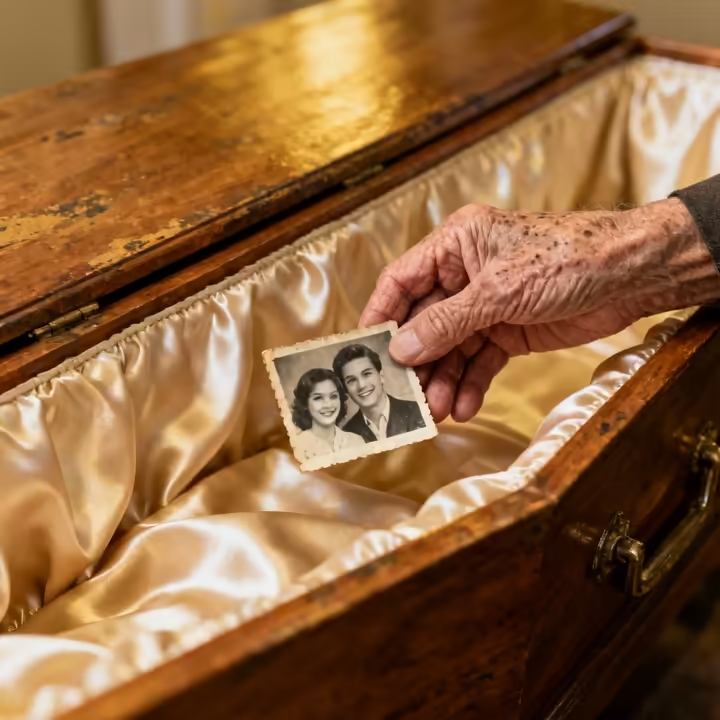
So, is it bad luck to put a picture in a coffin? The answer isn't a simple yes or no. It's a messy mix of folklore, religion, history, and the psychology of grief.
Old Wives' Tales and Bad Luck
While lots of people do it, tucking a photo in a coffin bumps up against some old, spooky beliefs. These superstitions come from a way of thinking called sympathetic magic. The idea is that an object that looks like a person, like a photo, holds a direct connection to their soul or life force.
A Link Between Worlds
In the Victorian era and still in places like Appalachia, it was common to turn family photos to face the wall when someone died. The reason was to stop the ghost of the recently deceased from seeing the pictures and trying to possess their living relatives. This is the same reason people covered mirrors, to keep the spirit from getting trapped.
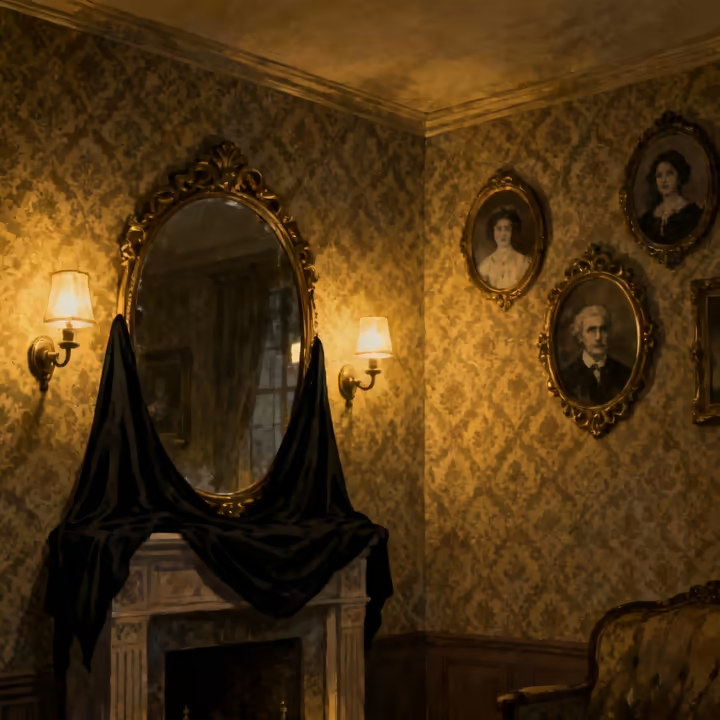
The fear wasn't about the coffin itself, but about putting a representation of a living person too close to a spirit. An old piece of European folklore says it all, "Never put the clothes of a living person on a corpse. That person will die too as the body rots". The belief was that as the clothes decayed, so would the life force of the person who owned them.
A photograph is basically the ultimate modern version of that piece of clothing. Following that same spooky logic, burying a photo of a living person with a corpse is like symbolically burying them alive. It creates a spiritual tether, binding the vitality of the person in the picture to the grave.
The "bad luck" was thought to be a wasting illness, a drop in fortune, or even an early death. Other superstitions, like a picture falling off a wall meaning someone will die, also point to this anxiety. The coffin is just the final, sealed container for a magical connection you probably don't want to make.
What Religions Around the World Think
What should go in a coffin is a big question for most cultures, and the answers show a deep split in thinking. Basically, two main ideas emerge. One is that the afterlife is purely spiritual and you need to ditch all your earthly junk to get there.
The other idea is that the afterlife is a real journey or another place, and you need to pack for the trip.
The "Leave It All Behind" Crew
Religions like Orthodox Judaism, Islam, and Buddhism are all about simplicity. In Orthodox Judaism, the dead are dressed in a plain white shroud ( tachrichim ) and buried in a simple wooden casket. No jewelry, no mementos, nothing, the point is that everyone is equal in death.
Islamic customs are similar, emphasizing a quick, simple burial without a casket or any personal items. Grave goods are seen as a worldly distraction from focusing on God.
Buddhism and Hinduism focus on escaping the cycle of suffering and rebirth by letting go of attachments. A photograph is a super-strong attachment. Placing one in a coffin could risk tying the spirit to the world of suffering it's supposed to leave.
The "Pack for the Trip" Crew
On the flip side, you have ancient and Indigenous traditions. The ancient Egyptians are famous for this, they packed tombs with everything you could possibly need in the afterlife, food, furniture, tools... even servants. They saw the afterlife as a direct continuation of this one.
Many Indigenous American traditions believe this too. The Arapaho, for example, would bury a warrior with his best horse to serve him in the next world. For these cultures, your stuff is part of who you are, in this life and the next.
And the In-Betweeners...
Spiritualism and similar beliefs think spirits can attach to objects. A photo could be a good thing, helping a psychic communicate with the dead. Or, it could be a bad thing, creating an unhealthy "soul tie" that traps the spirit here.
So where does the modern Western practice fit? It’s an echo of the "pack for the trip" philosophy, but with a modern twist. The reason is usually for the comfort of the living, a therapeutic act rather than a spiritual one.
| Belief System | Core Doctrine on Afterlife/Materialism | Stance on Personal Items in Coffin | Rationale/Key Concepts |
|---|---|---|---|
| Orthodox Judaism | Spiritual return to God; emphasis on equality in death. | Prohibited | Material possessions are irrelevant in the afterlife; simplicity ensures all are equal before God. 16 |
| Reform Judaism | More adaptable to modern customs while retaining core values. | Generally Permitted | Accommodates the sentimental and psychological needs of modern mourners. 18 |
| Christianity | Bodily resurrection and spiritual salvation; materialism is secondary. | Permitted / Neutral | No strict prohibition; seen as a matter of personal comfort for the bereaved rather than a theological necessity. 33 |
| Islam | Submission to God's will; focus on spiritual judgment, not material life. | Prohibited | Emphasizes simplicity and equality; worldly attachments are a distraction from God. 21 |
| Buddhism | Rebirth/Nirvana; goal is to escape suffering caused by attachment. | Discouraged | Attachments to people and objects are a primary source of suffering and hinder spiritual progress. 25 |
| Hinduism | Reincarnation ( samsara ); soul must detach from the material world. | Discouraged | Earthly attachments can create negative karma and impede the soul's journey to its next life. 29 |
| Spiritualism/Animism | Continued existence of the spirit; spirits can attach to objects. | Ambivalent | Can be a positive link for communication or a negative "soul tie" that traps the spirit. 38 |
| Indigenous American | Afterlife is a journey or continuation of life in a spirit world. | Encouraged / Essential | Items are necessary provisions for the spirit's journey and continued existence. 36 |
| Ancient Egyptian | Afterlife is a physical continuation of earthly existence. | Essential | The deceased requires all their worldly goods for use in the afterlife. 2 |
A Quick History of Coffin Photos
Putting a photo in a coffin is a pretty modern invention, born in the Victorian era. For thousands of years, grave goods were practical things, coins for the ferryman, weapons for battle, that sort of thing. They were useful items for a physical afterlife.
Then came the 19th century, a time that was weirdly obsessed with death. Mortality rates were high, so death was everywhere, but it was also highly romanticized. Into this culture came photography in 1839.
At first, photos were expensive and rare. For many families, especially those who lost a child, a post-mortem photograph, called a memento mori ("reminder of death"), was the first and only picture they'd ever have of them.
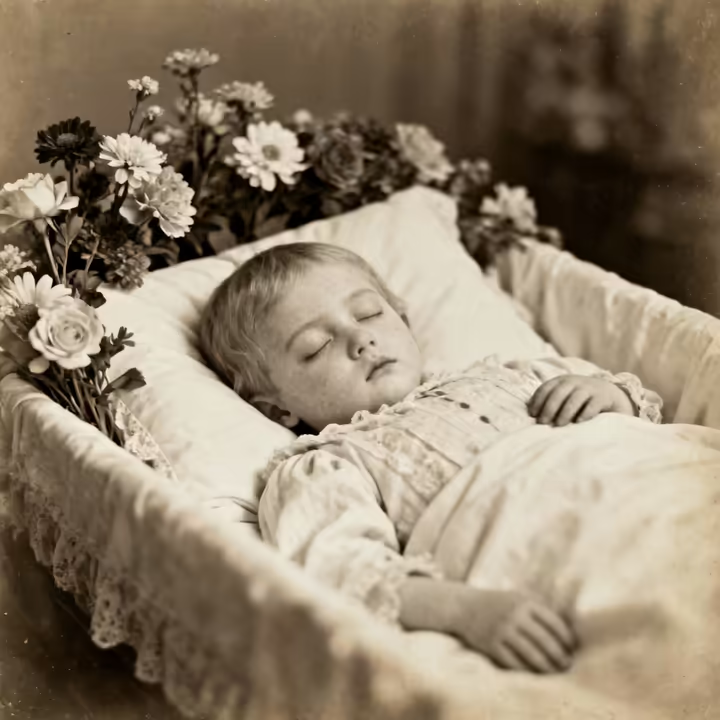
These photos seem creepy now, but Victorians treasured them. They weren't meant to be scary; they were meant to capture a final, peaceful image to remember. The photograph was a new kind of object that offered a powerful connection to the person who was gone.
This new technology created a new ritual. The goal of putting an object in a coffin shifted. It was no longer about equipping the dead for a journey, but about anchoring their memory and identity here on earth.
As cameras got cheaper and more common in the 20th century, the act of choosing a single, physical photo to bury became even more special. In our digital age of endless images, it’s a deliberate, personal choice. It's a loving tribute in a world of fleeting digital pictures.
The Real Reason We Do It: Grief and Healing
Superstitions and history aside, putting a photo in a coffin is really about the psychology of grief. It’s a final act of care. When you feel powerless, it's one last thing you can do for your loved one.
The idea is that the person shouldn't be alone, that they should have a reminder of the love they had in life. This gives huge comfort to the person left behind. It makes the final goodbye feel more personal and intimate.
A Security Blanket for Grief
You know how a kid has a security blanket? Psychologists think we use objects in the same way when grieving. An item like a photo becomes a "transitional object," a physical anchor that represents the safety and presence of the person we lost.
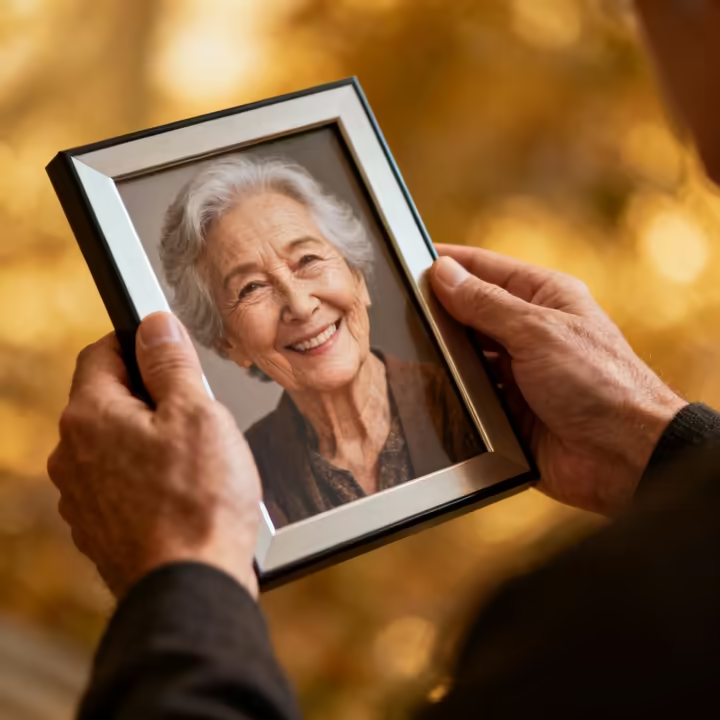
A photograph is an especially powerful transitional object. It’s a direct picture of the person and the relationship, a perfect container for memory and emotion.
The act of placing the photo in the coffin does two things at once. First, you're confirming your bond is forever by giving them the picture. But by letting it go and closing the coffin, you're also performing a necessary act of release.
This single gesture helps you do the two hardest things in grieving, hold on to the love while letting go of the person. It's both a comfort and a smart psychological tool for healing. It helps you accept the reality of the loss and begin to move forward.
What the Funeral Director Says
Funeral directors see this all the time. For them, the question isn't about superstition or religion; it's about helping families say goodbye. It's a very common and accepted part of personalizing a funeral.
In fact, they often ask families if there are any special items they'd like to place in the casket. Their main piece of advice is a practical one. If the photo is a one-of-a-kind original, make a good copy to put in the coffin, because you're never getting it back.
Burial vs. Cremation Rules
The main thing to consider is whether it's a burial or a cremation. For a burial, the rules are pretty relaxed. You can generally put anything in the casket as long as it's not hazardous and the lid can still close.
Cremation is much stricter because of safety and environmental laws. The cremation chamber gets incredibly hot (1,400 to 1,800 degrees Fahrenheit), so funeral directors have to screen what goes in. Prohibited items include:
- Pressurized containers: Things like aerosol cans can explode. Pacemakers have to be removed for the same reason.
- Glass and certain plastics: These can melt, damage the equipment, or release toxic fumes.
- Batteries: Anything with a battery, like a cell phone, is a no-go.
A regular paper photograph is almost always fine for cremation. If it's in a frame, the frame needs to be made of plain wood. Metal or glass frames have to be removed.
Basically, the boss of the coffin has changed. It used to be a priest worried about your soul. Now it's a funeral director worried about their equipment and local regulations.
So, What's the Verdict?
In the end, there's no single answer. Whether it's "bad luck" to put a photo in a coffin depends entirely on what you believe.
If you come from a background with strong folklore about sympathetic magic, you might see it as a genuinely dangerous act. These beliefs say you're creating a spiritual link that could drain the life from the person in the photo.
Most major religions would advise against it, but not because of bad luck. They see it as an unnecessary attachment to the material world that might get in the way of the soul's journey. It's not unlucky, just spiritually unhelpful.
But for most people in the modern Western world, the act is seen through the lens of psychology and love. It's a healthy, harmless, and meaningful way to express grief. It's a ritual that provides comfort and helps the living heal.
The choice is yours. For the vast majority, the emotional benefits far outweigh any old fears. It is a final, tender gesture of connection, a whisper of "you are not forgotten" into the great silence.
Works cited
- Can Things Be Placed In a Casket? - Funeral Etiquette, https://www.thegardens.com/can-things-placed-casket/
- Ancient Egyptian funerary practices - Wikipedia, https://en.wikipedia.org/wiki/Ancient_Egyptian_funerary_practices
- Leaving Something in the Casket - Hoffmann Schneider & Kitchen Funeral Home and Crematory, https://www.hskfhcares.com/resources/our-blog/leaving-something-in-the-casket
- Leaving Something in the Casket - Smith Family Funeral Homes, https://www.smithfamilycares.com/leaving-something-in-the-casket
- Grave Goods Reveal Beliefs About the Afterlife - Discover Magazine, https://www.discovermagazine.com/grave-goods-reveal-beliefs-about-the-afterlife-45030
- Funeral Customs Rooted in Superstition - My Send Off - Stoness ..., http://scottweb2.frontrunnerpro.com/mysendoff/story/funeral-customs-rooted-in-superstition
- Victorian Funeral Customs and Superstitions – Friends of Oak Grove ..., https://friendsofoakgrovecemetery.org/victorian-funeral-customs-fears-and-superstitions/
- Death Superstitions | Funeral Homes - Moles Farewell Tributes, https://www.molesfarewelltributes.com/blog/death-superstitions/
- Hold Your Breath & Other Cemetery Superstitions - Kathleen Maca, https://kathleenmaca.com/index.php/2015/10/05/hold-your-breath-other-cemetery-superstitions/
- The down-to-earth origins of forgotten funeral superstitions - Golden Charter, https://www.goldencharter.co.uk/news-and-info/2018/the-down-to-earth-origins-of-forgotten-funeral-superstitions/
- Death Superstitions and Traditions in Appalachia | Blind Pig and The Acorn, https://blindpigandtheacorn.com/death-superstitions-and-traditions-in-appalachia/
- Traditional European Folklore on Death and Dying | Nonfictioness, https://nonfictioness.com/folklore/traditional-european-folklore-on-death-and-dying/
- Interpreters of the Real: Poems about Photographs in the Periodical Press, 1840–1860 | Journal of Victorian Culture | Oxford Academic, https://academic.oup.com/jvc/article/29/3/415/7616018
- Appalachian Death Superstitions - Got Mountain Life, https://gotmountainlife.com/appalachian-death-superstitions/
- Victorian Death Photography and their Superstitions | Life Comes Full Circle, https://amandanorman.com/victorian-death/
- Jewish Burial Garments - Star of David Memorial Chapels, https://jewish-funeral-home.com/jewish-burial-garments/
- Bereavement in Judaism - Wikipedia, https://en.wikipedia.org/wiki/Bereavement_in_Judaism
- Preparing for a Jewish Funeral: A Guide | Reform Judaism, https://reformjudaism.org/beliefs-practices/lifecycle-rituals/death-mourning/preparing-jewish-funeral-guide
- Jewish Funeral Traditions, https://www.clevelandjewishfunerals.com/jewish-traditions/jewish-funeral-traditions
- Unique Burial & Cremation Customs Series - Muslim Traditions - Phaneuf Funeral Home, https://phaneuf.net/blog/unique-burial-cremation-customs-series-muslim-traditions
- Muslim Funeral Traditions - Funerals Your Way, https://funeralsyourway.com/muslim-funeral-traditions/
- What are the rules for graveyard in Islam? - Justhighstone, https://www.justhighstone.com/what-are-the-rules-for-graveyard-in-islam.html
- Islamic Funeral Traditions | Callaghan Mortuary, https://www.callaghanmortuary.com/how-to-plan-a-funeral/islamic-traditions/
- How to Look after Graves in Islam - Islam Question & Answer, https://islamqa.info/en/answers/126400
- The Buddha's philosophy of non-attachment and the middle way, https://www.originalbuddhas.com/blog/the-buddhas-philosophy-of-non-attachment-and-the-middle-way
- Why do Buddhist consider attachment the root of suffering? : r/Buddhism - Reddit, https://www.reddit.com/r/Buddhism/comments/14jz40a/why_do_buddhist_consider_attachment_the_root_of/
- Buddhist View on Death and Rebirth - Urban Dharma, https://www.urbandharma.org/udharma5/viewdeath.html
- A Buddhist approach to death, dying and funerals – Poppy's Blog, https://www.poppysfunerals.co.uk/blog/a-buddhist-approach-to-death-dying-and-funerals/
- Hindu funeral & death rituals: A complete guide | Memorial Planning, https://www.memorialplanning.com/resources/religious-funerals-guide/hindu-funerals-guide/
- Hindu Funeral Rites and Death Rituals - Funeral Partners, https://www.funeralpartners.co.uk/help-advice/arranging-a-funeral/types-of-funerals/hindu-funeral-rites-and-death-rituals/
- Hinduism: Funeral & Burial Customs | eCondolence.com, https://www.econdolence.com/learning-center/religion-and-culture/hinduism/hinduism-funeral--burial-customs
- Artifacts: Grave Goods, Mummification, Online Exhibits, Exhibits, Spurlock Museum, U of I, https://www.spurlock.illinois.edu/exhibits/online/mummification/artifacts3.html
- Grave goods - Wikipedia, https://en.wikipedia.org/wiki/Grave_goods
- Grave Goods in Ancient Egypt | Middle East And North Africa - Facts and Details, https://africame.factsanddetails.com/article/entry-151.html
- blog.billiongraves.com, https://blog.billiongraves.com/native-american-burial-rituals/#:~:text=Arapaho%20Native%20American%20Burial%20Rituals&text=A%20spacious%20grave%20was%20dug,and%20placed%20in%20the%20grave.
- Native American Burial Rituals - BillionGraves Blog, https://blog.billiongraves.com/native-american-burial-rituals/
- Cahuilla Death Ritual: Burning the Passed's Possessions | USC Digital Folklore Archives, https://folklore.usc.edu/cahuilla-death-ritual-burning-the-passeds-possessions/
- How do I attach my soul to an object? - Quora, https://www.quora.com/How-do-I-attach-my-soul-to-an-object
- Animism - Wikipedia, https://en.wikipedia.org/wiki/Animism
- Soulties: how they are formed, what they do, and how to break soul ties - Great Bible Study, https://www.greatbiblestudy.com/deliverance-ministry/basic-introduction-to-soul-ties/
- Notes Altar & Prayer Ministry Training Lesson 10 - Occult / Soul Ties / Bondage, https://raphahmi.org/wp-content/uploads/2018/10/Lesson-10-Occult-Soul-Ties-Bondage-rev.pdf
- www.funeralguide.co.uk, https://www.funeralguide.co.uk/blog/death-around-world-native-american-beliefs#:~:text=Many%20Native%20American%20death%20rituals,valuable%20items%20in%20the%20afterlife.
- Death and Burial in the Ancient World | Research Starters - EBSCO, https://www.ebsco.com/research-starters/history/death-and-burial-ancient-world
- Ancient Greek Burial Customs | University of the Pacific: Theatre Arts Department, https://pacifictheatrearts.wordpress.com/ancient-burial-customs/
- en.wikipedia.org, https://en.wikipedia.org/wiki/Grave_goods#:~:text=Grave%20goods%20can%20be%20regarded,bank%20note%22%20and%20related%20customs.
- Grave Goods in Early Medieval Europe: regional variability and decline - Internet Archaeology, https://intarch.ac.uk/journal/issue56/11/full-text.cfm
- Victorian Death Photos and Other Strange Victorian Mourning ..., https://www.thoughtco.com/victorian-mourning-4587768
- We Used to Photograph the Dead. What a curious Victorian practice… | by Brandy L Schillace | Elemental, https://elemental.medium.com/we-used-to-photograph-the-dead-6fea9c5aa33
- VICTORIAN MOURNING: SOMETHING WOKE Kristan Ellsworth Reggie Jayne – History 190 November 2017, https://cwi.edu/sites/default/files/1/victorian_mourning_something_woke_ellsworth_kristan.pdf
- Post-mortem photography - Wikipedia, https://en.wikipedia.org/wiki/Post-mortem_photography
- 27 Victorian Death Photos — And The Disturbing History Behind Them, https://allthatsinteresting.com/victorian-death-photos
- Photos of the dead | Victorian Visual Culture, https://victorianvisualculture.blog/2020/12/14/photos-of-the-dead/
- Post-Mortem Photography - The Art of Real Victorian Death Photos, https://artincontext.org/post-mortem-photography/
- FUNERAL HOMES AND FUNERAL PRACTICES | Encyclopedia of Cleveland History, https://case.edu/ech/articles/f/funeral-homes-and-funeral-practices
- Funeral Practices Through the Ages in America, https://www.lockefuneralservices.com/blog/post/funeral-practices-through-the-ages-in-america
- Full article: Digital mourning: The transformative role of photography in contemporary grief practices - Taylor & Francis Online, https://www.tandfonline.com/doi/full/10.1080/07481187.2025.2476972?af=R
- Digital photographic legacies, mourning, and remembrance: looking through the eyes of the deceased - ResearchGate, https://www.researchgate.net/publication/369026899_Digital_photographic_legacies_mourning_and_remembrance_looking_through_the_eyes_of_the_deceased
- Funerals and Memorial Practices - Medical Humanities | Baylor University, https://medicalhumanities.artsandsciences.baylor.edu/sites/g/files/ecbvkj751/files/2022-07/Hoy2020_ReferenceWorkEntry_FuneralsAndMemorialPractices.pdf
- The Comfort of Objects - Keefe Funeral Homes, https://www.keefefuneralhome.com/the-comfort-of-objects
- Melancholy objects - MARGARET GIBSON - Southwestern Secure Online, https://people.southwestern.edu/~bednarb/vmc/articles/gibson.pdf
- Transitional objects of grief - Research Nebraska, https://experts.nebraska.edu/en/publications/transitional-objects-of-grief-2
- (PDF) Transitional objects of grief - ResearchGate, https://www.researchgate.net/publication/338542284_Transitional_objects_of_grief
- Healing Grief With Transitional Objects | Eterneva, https://www.eterneva.com/resources/transitional-objects-for-grief
- The use of Winnicott's concept of transitional objects in bereavement practice, https://www.bereavementjournal.org/index.php/berc/article/view/1075
- Top Ten Items to Place in a Casket - Fioritto Funeral Service, https://fiorittofuneralservice.net/top-ten-items-to-place-in-a-casket/
- Funeral Etiquette: Should Personal Items be Placed on a Coffin? - Simon's Ceremonies, https://www.simonsceremonies.co.uk/post/funeral-etiquette-should-personal-items-be-placed-on-a-coffin
- What Can You Put In A Coffin? | Funeral Guide, https://www.funeralguide.co.uk/help-resources/arranging-a-funeral/funeral-guides/what-can-you-put-in-a-coffin
- Items buried with deceased in casket? : r/askfuneraldirectors - Reddit, https://www.reddit.com/r/askfuneraldirectors/comments/1lc271e/items_buried_with_deceased_in_casket/